
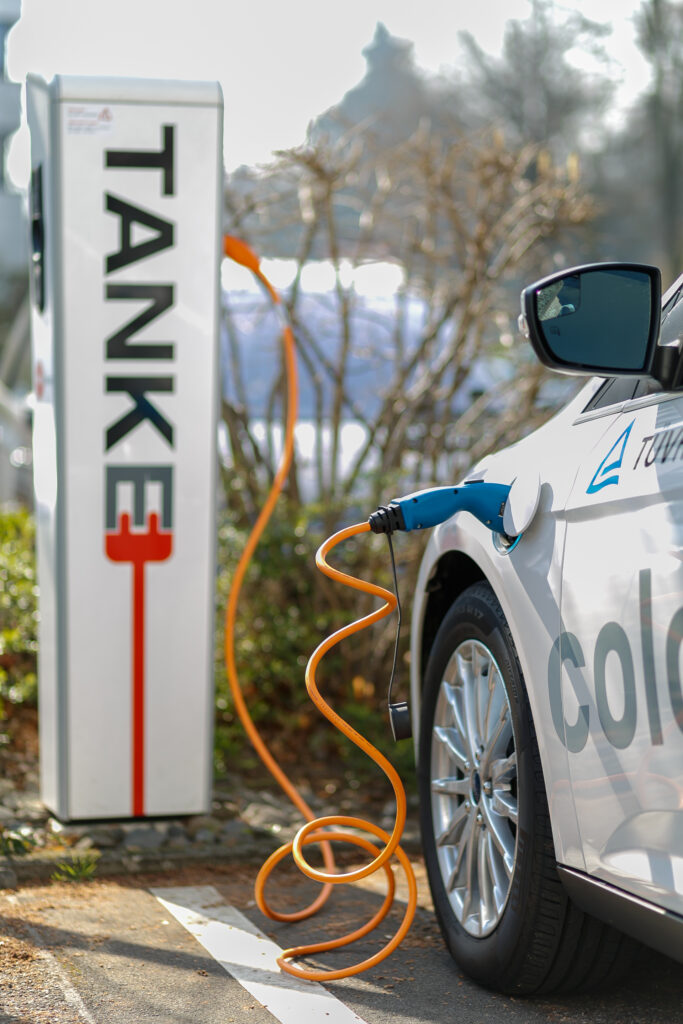
Ask an electric car driver about their last bad journey and the story is rarely about range. It is about the charger that would not start, the app that would not pay, the rapid hub occupied by a van. Public charging — its reliability, not its existence — has become the EV transition’s governing problem, as transport coverage by the BBC has documented in surveys that find broken or blocked chargers at the top of driver complaints.
The networks are young infrastructure built at venture speed: thousands of charge points installed by competing operators with different apps, plugs and pricing. The technology to charge a car is solved. The civilisation around it — maintenance, payment, planning law — is still being assembled.
Uptime Is the Whole Ballgame
A charger network’s reputation is set by its worst unit on a rainy night. Industry data and driver surveys converge: a substantial minority of public chargers are out of service at any given time, and failed sessions — the plug connects, the charge never starts — are commoner than the networks’ marketing admits. Reliability regulation now emerging sets the bar near ninety-nine per cent, with public reporting.
The fixes are operational more than technological: remote monitoring that dispatches repairs before drivers report them, modular hardware that swaps in minutes, and spares kept on the van. The operators earning loyalty are those treating uptime as the product — because to the driver, it simply is.
Payment, Plugs and the End of App Chaos
The early networks each demanded their own app, account and preloaded balance — a tollbooth on every road. Mandated contactless payment and roaming agreements are dissolving that absurdity: tap a bank card, charge, leave. It is hard to overstate how much of the EV’s friction was never about electricity at all.
Standardisation is winning on plugs too, as the industry converges on common connectors and cars begin to talk to chargers fluently — identifying themselves, billing automatically, preconditioning their batteries en route for the fastest possible session. The petrol station’s century of polish is being compressed into a few product cycles.
The Grid Queue Behind the Forecourt
The least visible constraint is the connection. A motorway charging hub draws power like a small town, and grid reinforcements queue for years in some regions — the true pacing item of the whole transition. Operators describe sites fully built, chargers installed, waiting on the cable: monuments to a planning system built for a slower century.
The workarounds are ingenious: battery-buffered chargers that sip from the grid and serve cars at full speed, solar canopies, and load management that shares capacity across a forecourt. Meanwhile the queue itself is being reformed — connection processes are the unglamorous frontier on which the EV era’s timetable actually depends.
Charging speeds keep climbing — the newest cars add hundreds of kilometres in the time a coffee takes — but the curve has a human limit. Once a stop reaches ten comfortable minutes, drivers stop asking for faster and start asking for nicer: light, shelter, a decent café. The forecourt of the future is a hospitality business with chargers attached.
Home Is Still Where the Charging Is
For all the forecourt drama, most charging happens where the car sleeps. Home charging is cheap, effortless and — for those with driveways — essentially perfect, which stratifies the EV experience by housing type. The policy frontier is the pavement: lamppost chargers, cross-street gullies and resident schemes bringing the home advantage to terraced streets.
Get that right and the public network’s job narrows to journeys — rapid hubs on routes, priced for speed. Get it wrong and the transition inherits a visible inequity: effortless motoring for house-owners, charger roulette for everyone else. The hardware is ready either way; the fairness is a choice.
The EV transition will be remembered as a story about batteries, but it will be decided at the charger. Reliability is a mundane virtue — until you are the driver at midnight, in the rain, watching a screen refuse to start. The industry that masters mundane will win the decade.
Read more in our Blog section, and follow the day’s coverage on our homepage.
